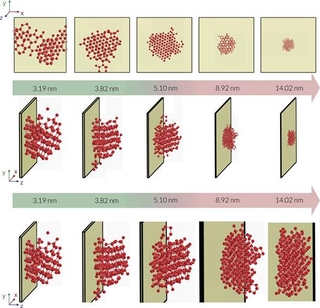
Representative critical crystalline nuclei from nucleation on five INPs of different size s depicted from two different angles.
Crystallization is a first-order phase transition that appears widely in nature and technology, from ice formation in clouds to silicon crystallization in electronics, pharmaceutical solids, hydrate formation in pipelines, and polymer processing. It can be beneficial, as in drug manufacturing, or harmful, as in the formation of amyloid fibrils linked to Alzheimer’s disease. Despite its importance, the microscopic mechanisms of crystal formation remain poorly understood and are an active area of research.
In our lab, we use molecular simulations and advanced sampling methods such as forward-flux sampling to study crystal nucleation, the rate-limiting step in many crystallization processes. We focus on non-classical environments, including fluid interfaces and heterogeneous surfaces, and develop methods to identify and reduce simulation artifacts such as finite-size effects. Our goal is to improve understanding of both homogeneous and heterogeneous nucleation and to create reliable tools for accurate and efficient simulations.
Related Work
-
44. Robustness of Classical Nucleation Theory to Chemical Heterogeneity of Crystal Nucleating Substrates
Sulantay Vargas F., Hussain S., Haji-Akbari A. Crystal Growth & Design (2026) 26 (5): 1943–1952
-
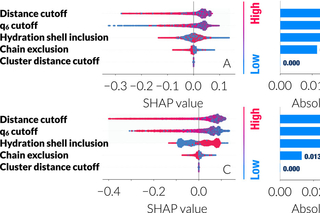
41. The impact of hydration shell inclusion and chain exclusion in the efficacy of reaction coordinates for homogeneous and heterogeneous ice nucleation.
Sinaeian K., Haji-Akbari A. J. Chem. Phys. 162, 164102 (2025)
-
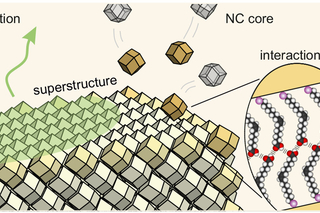
38. Nanocrystal Assemblies: Current Advances and Open Problems
Bassani C.L., van Anders G., Banin U., Baranov D., Chen Q., Dijkstra M., Dimitriyev M.S., Efrati E., Faraudo J., Gang O., Gaston N., Golestanian R., G